Partnering with Institutions to Build the Future of Agriculture
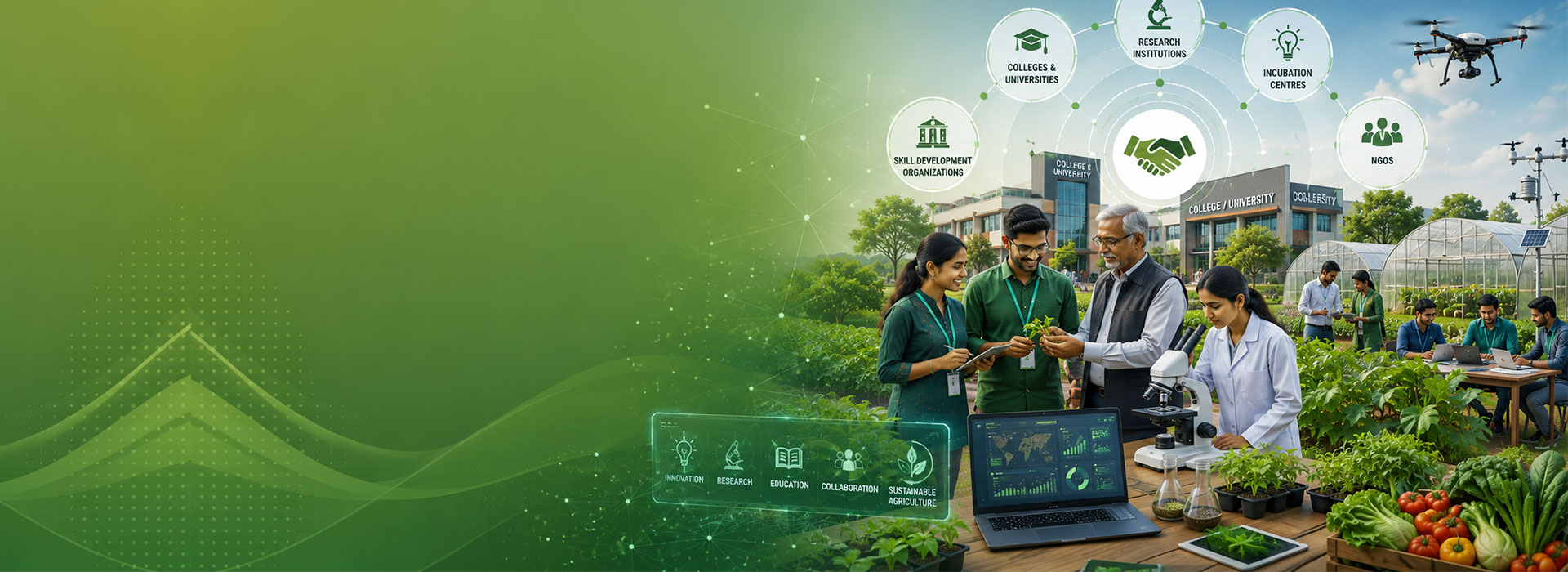
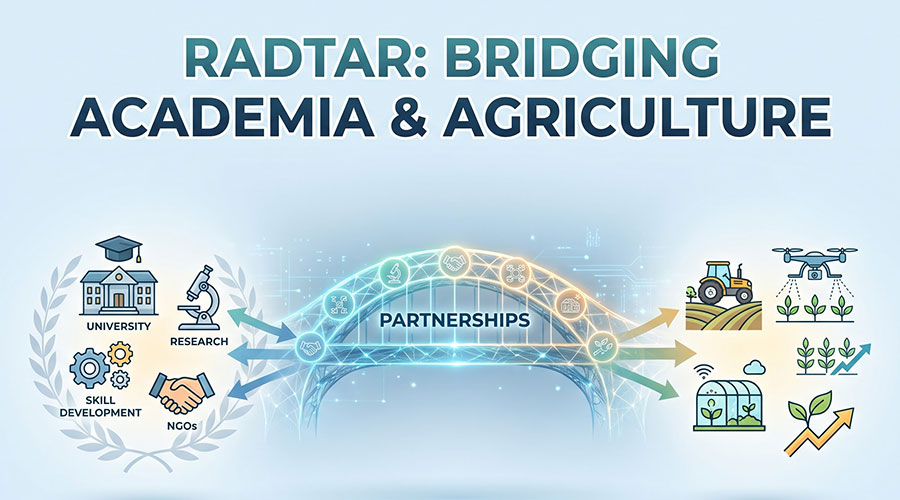
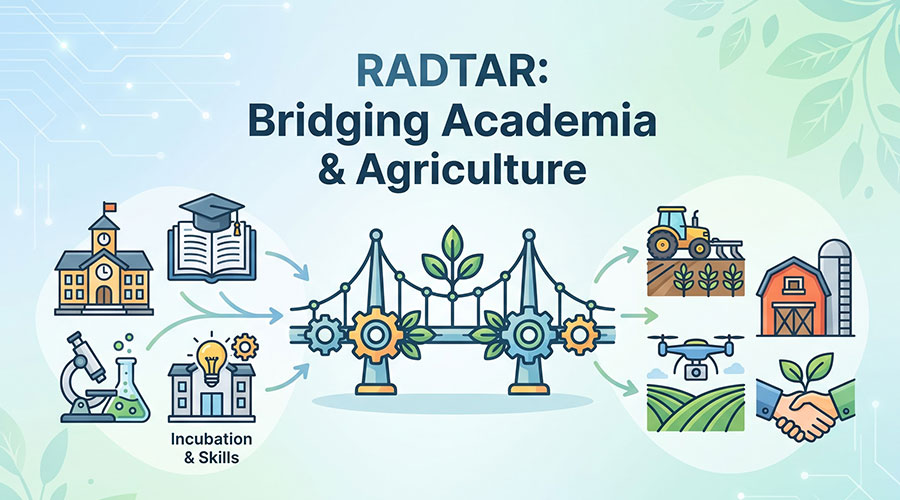
RADTAR partners with colleges, universities, research institutions, incubation centres, NGOs, and skill development organizations to bridge the gap between academia and the agriculture industry.
RADTAR partners with colleges, universities, research institutions, incubation centres, NGOs, and skill development organizations to bridge the gap between academia and the agriculture industry. Through our Agri Innovation Hub initiative, we connect students, faculty, researchers, farmers, FPOs, industries, and technology partners to create practical learning, innovation, entrepreneurship, and sustainable rural development.
Our vision is to establish 100 Agri Innovation Hubs across colleges and empower 3,000 to 5,000 students over the next five years, creating the next generation of agripreneurs, innovators, researchers, and rural technology leaders.
RADTAR Agri Innovation Hub
The Agri Innovation Hub is an Industry-on-Campus initiative that transforms colleges into centres of agricultural innovation, entrepreneurship, and community engagement. The program enables students to work on real-world agricultural challenges while collaborating with farmers, industries, startups, and research organizations.
The Initiative Supports
Industry-on-Campus Programs
Student Innovation & Entrepreneurship
Agri Startup Incubation
Live Industry Projects
Faculty Research Collaboration
Farmer & FPO Engagement
Product Development & Commercialization
AI & Digital Agriculture Solutions
Sustainable Agriculture & Climate Innovation
Rural Development & Community Outreach
How RADTAR Supports Institutions
Industry-on-Campus Initiative
Establish Agri Innovation Hubs that connect education, research, industry, and farming through experiential learning.
Internships & Live Projects
Provide students with hands-on experience in AI, digital agriculture, food technology, precision farming, GIS, IoT, traceability, market linkages, and sustainable agriculture.
Research & Innovation
Support faculty and students with research projects, pilot programs, field studies, technology validation, and product development.
Student Entrepreneurship
Mentor students to develop AgriTech startups, value-added products, business models, and innovative solutions that address real agricultural challenges.
Farmer & Industry Collaboration
Connect institutions with farmers, FPOs, government agencies, industries, and technology partners to create practical solutions and community impact.
International Collaboration
Facilitate partnerships with global universities, research institutions, industry experts, and alumni networks to promote collaborative research, innovation, and student exchange opportunities.
Key Benefits for Institutions
Establish a RADTAR Agri Innovation Hub on campus
Industry-on-Campus learning ecosystem
Student internships and live industry projects
Faculty research and consultancy opportunities
Startup incubation and entrepreneurship support
Collaboration with farmers, FPOs, and industries
AI, Digital Agriculture & Smart Farming exposure
National and international academic collaborations
Alumni engagement and industry networking
Enhanced institutional brand visibility and community impact
Who Can Partner with RADTAR?
Colleges & Universities
Engineering & Polytechnic Colleges
Agriculture & Food Technology Institutions
Management & Business Schools
Research Centres
Incubation & Innovation Centres
IEDCs & Entrepreneurship Cells
NGOs & Development Organizations
Skill Development Centres
Government & Academic Institutions
Our Commitment to Institutions
RADTAR is committed to building long-term strategic partnerships with educational institutions that transform campuses into centres of innovation, entrepreneurship, and community impact. Through our Agri Innovation Hub initiative, we integrate technology, research, industry collaboration, farmer engagement, and experiential learning to prepare students for the future of agriculture and the bioeconomy.
Our collaborative model creates shared value for all stakeholders. Students gain hands-on industry experience, internships, startup opportunities, and pathways to become future agripreneurs and innovators. Colleges strengthen their academic excellence, industry partnerships, research output, brand visibility, alumni engagement, and community outreach. Farmers and FPOs benefit from access to technology, research, skilled student support, and market linkages, while industry partners gain access to innovation, talent, research collaboration, and sustainable business opportunities.
Together, we create a win-win ecosystem where education, innovation, entrepreneurship, and agriculture work hand in hand to generate social impact, commercial value, and sustainable rural development.
Join the RADTAR Agri Innovation Hub Network
Become part of a growing ecosystem that connects education, innovation, research, entrepreneurship, farmers, and industry. Together, we can prepare future agripreneurs, strengthen institutional excellence, and build a smarter, more sustainable agricultural future.
Our Successful Institutional Collaborations
SB College, Changanassery / Center for Kuttanad Studies and Research (CKSR)
RADTAR successfully completed the RADTAR Internship Program 2026 in association with CKSR for students of SB College, Changanassery. Conducted from April 29 to May 15, 2026, the program focused on Technology Enabled Agriculture and Agri-Startup, covering AI-enabled agriculture, digital farming systems, precision agriculture, agri-startup ecosystems, smart farm management, market linkage systems, rural innovation models, field visits, research activities, surveys, and interactions with farmers and industry experts.
Catholicate College, Pathanamthitta
RADTAR successfully conducted the FYUGP Internship Programme 2026 with the Postgraduate & Research Department of Botany, Catholicate College, Pathanamthitta. Held from April 20 to May 5, 2026, the program on AI Powered Smart Agriculture & Agri Startup Innovation covered AI and digital agriculture, smart farming technologies, field data collection and analysis, FPO and market linkages, climate-smart agriculture, and agri-startup innovation.